Fachschaft Englisch

KI-generierte Illustration

Learning a language. Understanding cultures. Connecting with the world.

English is a global language. We encounter it in music, films, series, social media, computer games, science, travel, international cooperation and professional life. Being able to use English confidently opens doors: it helps us communicate across borders, access information from around the world and take part in global conversations.

In English lessons at Gymnasium Kaltenkirchen, students learn to understand, speak, read and write English. But English is about more than vocabulary and grammar. It also offers insights into other countries, cultures, ways of life and perspectives.

In this way, English combines language learning with intercultural understanding, media literacy and the ability to act confidently and thoughtfully in an increasingly connected world.

English in lower and middle school

In lower and middle school, students build the foundations for using English successfully. They continuously expand their vocabulary, learn important grammatical structures and practise using English in a wide range of situations.

Lessons are closely connected to students’ lives and interests. Topics such as school, family, free time, travel, media, friendship, the environment, history, culture and social issues create meaningful opportunities for speaking, writing and understanding.

As students move through the year groups, texts become more demanding, tasks become more complex and language use becomes more precise. Students learn to understand longer texts, work with audio and video material, express their own opinions and write different types of texts.

English in upper school

In upper school, English continues as an advanced foreign language. Lessons deepen linguistic, literary, media-related and intercultural competences.

Students work with more complex non-fiction texts, literary texts, films, speeches, articles and current debates. They analyse language, perspectives and arguments, develop interpretations and express their own views in a clear and well-founded way.

Topics such as identity, globalisation, migration, media, democracy, future challenges, anglophone cultures and international conflicts show that English is not only a language subject, but also a subject that helps students understand the world.
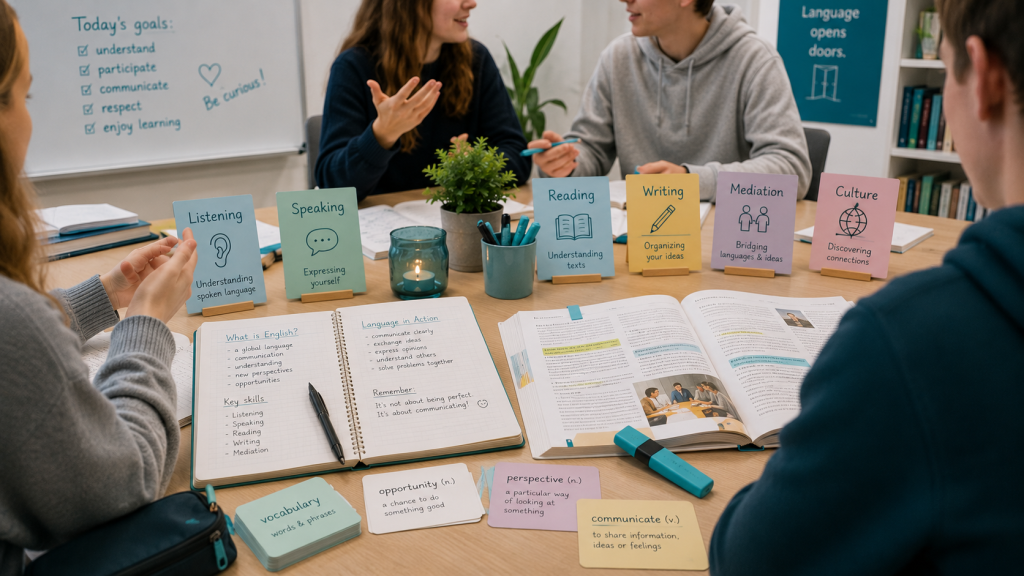
 

What is English about?

KI-generierte Illustration

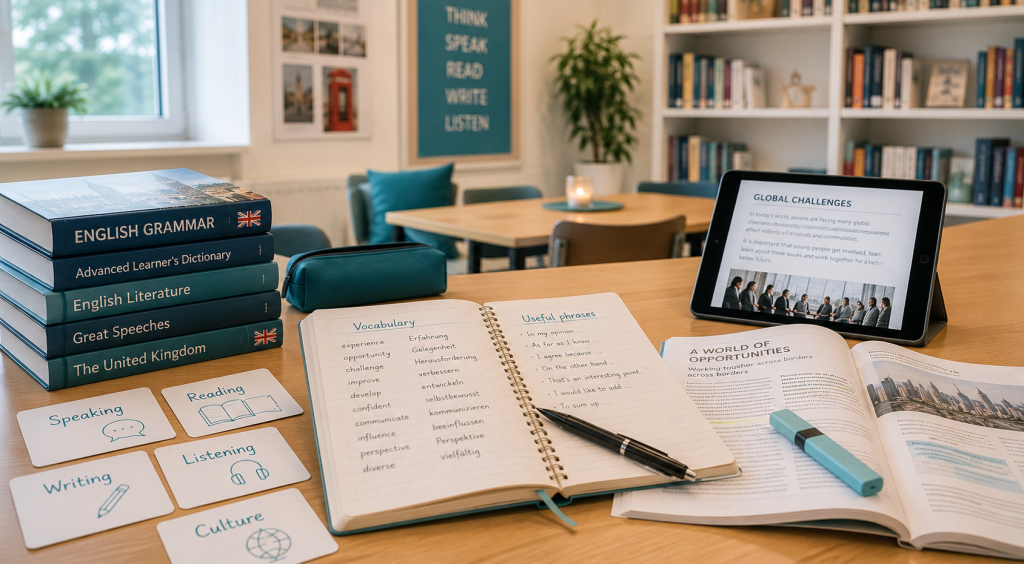
English lessons develop a range of skills: listening, speaking, reading, writing, mediation, vocabulary, grammar, intercultural learning and working with texts and media.

Students learn to communicate in everyday situations, express their ideas, take part in conversations, understand texts and produce their own writing for different audiences and purposes. Step by step, they become more confident and independent users of the English language.

From the very beginning, English is a communicative subject. This means that language is not only studied, but actively used — in pair work, role plays, presentations, discussions, writing tasks and creative projects.

Texts, media and culture

KI-generierte Illustration

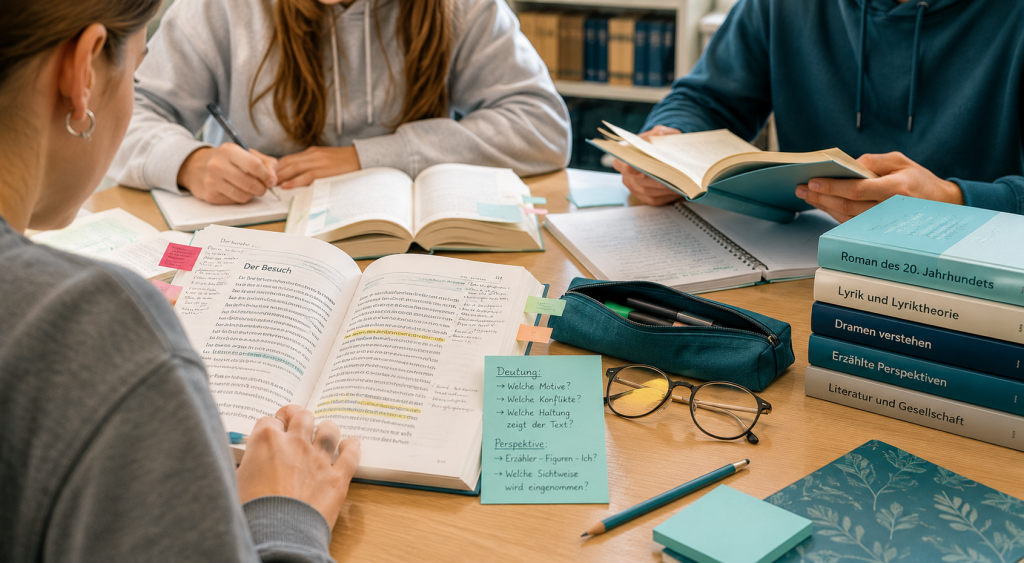
English lessons open up access to many different kinds of texts and media: stories, novels, poems, songs, films, series, speeches, newspaper articles, blogs, podcasts and digital formats.

Students learn to understand content, analyse how texts are constructed, recognise different perspectives and evaluate texts critically. Cultural contexts also play an important role: How do people live in other countries? Which values, conflicts and experiences become visible? What images of society, identity and the future are created?

Especially when working with media, it becomes clear how important English is today. Many sources of information, public debates and cultural products are international — and often in English.

Communicating and presenting

KI-generierte Illustration

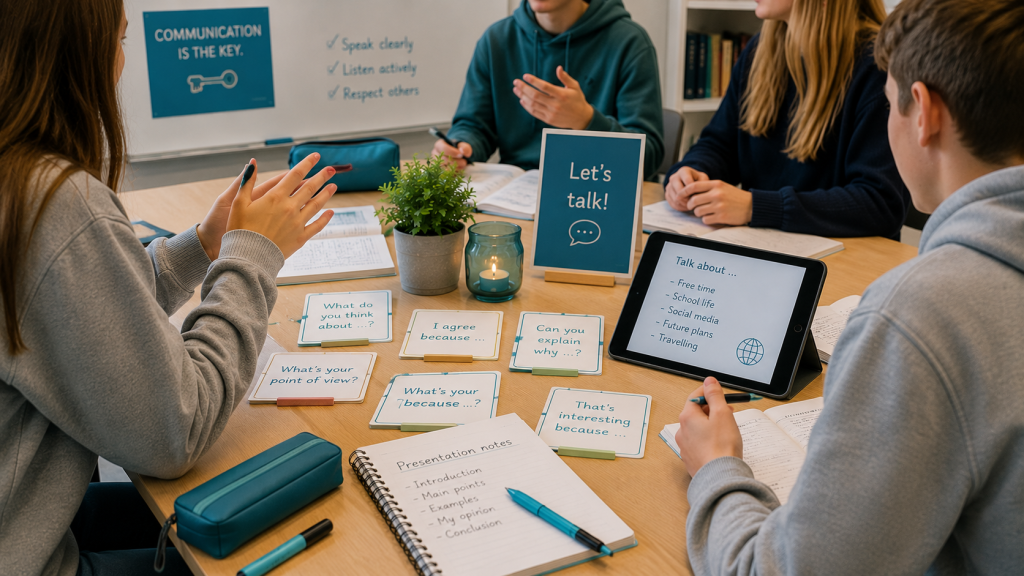
One of the central aims of English lessons is communicative competence. Students learn to express themselves clearly, appropriately and with increasing precision in English.

This includes short conversations as well as presentations, discussions, interviews, role plays and oral examination formats. Mistakes are part of the learning process. What matters is that students actively try out the language, use feedback and gradually become more confident.

English lessons are therefore a space in which language is not only learned, but actually used.

Intercultural learning

KI-generierte Illustration

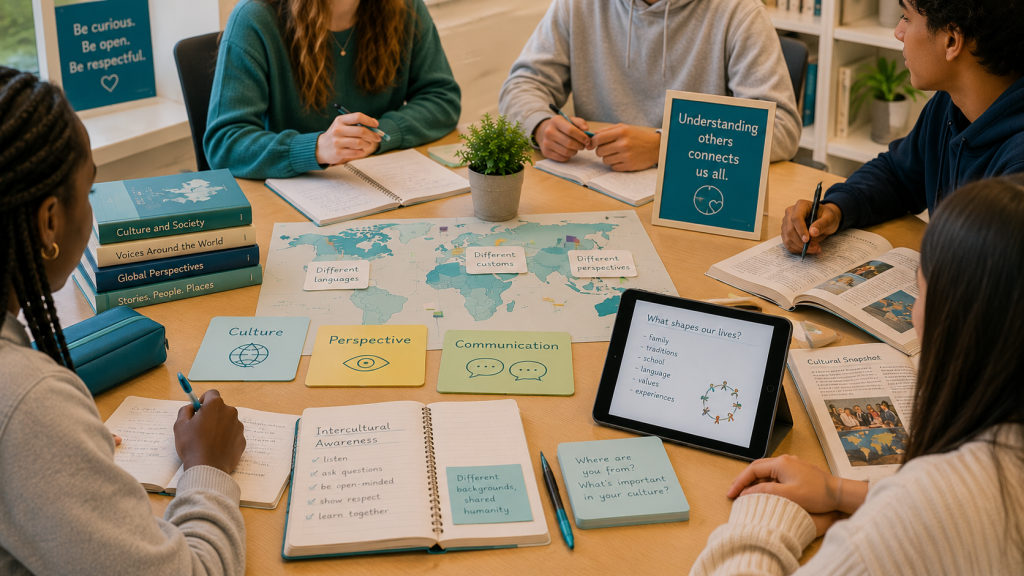
English lessons broaden students’ view of the world. Students encounter different countries, cultures and ways of life in the English-speaking world and beyond.

They learn to recognise similarities and differences, change perspectives and reflect critically on cultural assumptions. Intercultural learning does not simply mean learning facts about other countries. It also means questioning one’s own point of view.

In this way, English supports openness, tolerance, judgement and the ability to communicate across cultural boundaries.

English at GymKaki

Our aim is to offer English lessons that combine language confidence, enjoyment of communication, cultural curiosity and critical thinking. Students should experience English as a living language that gives them access to people, media, literature, science and international perspectives.

English therefore makes an important contribution to general education — and prepares students for many fields of study, training and work in which communication, language skills, media literacy and intercultural competence are essential. 

KI-generierte Illustration